
Interpretive Signs telling the story of our signature Southern Alberta crops
Details
Southern Alberta
The Idea
The Link Pathway Committee is a volunteer-run charitable organization working to connect Lethbridge and Coaldale through an accessible multi-use pathway across the agricultural landscape of southern Alberta.
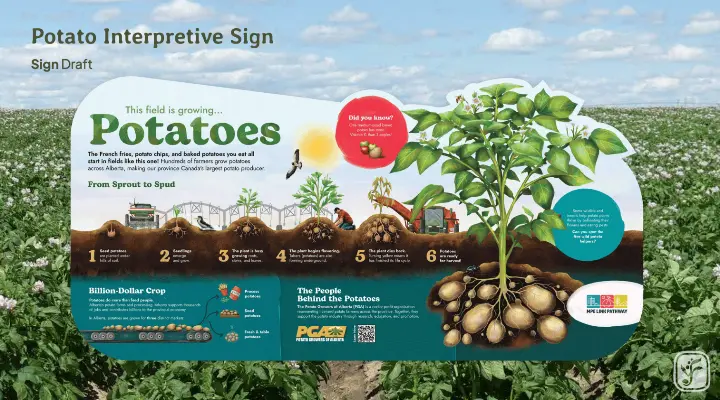
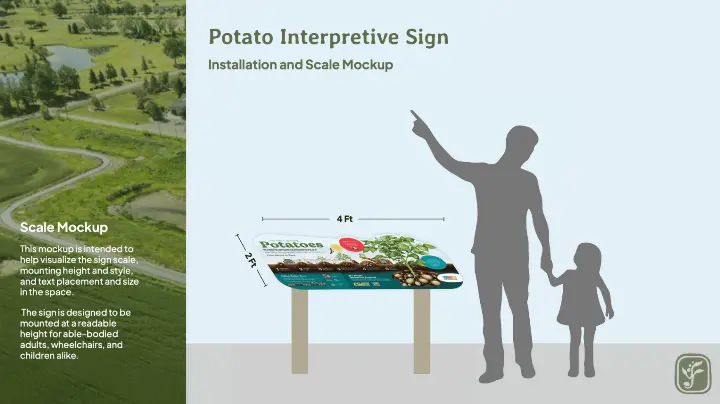
Our idea is to create a series of agricultural interpretive panels along the Link Pathway that help trail users discover the crops growing around them and understand the important role agriculture plays in our region.
Southern Alberta produces food that is enjoyed across Canada and around the world, yet many people who live here have few opportunities to connect directly with the farms and crops surrounding their communities. The Link Pathway provides a unique opportunity to change that. As people walk, run, cycle and explore the trail, they will travel directly through some of the region's most productive agricultural land.
Along the route, interpretive panels will introduce trail users to staple southern Alberta crops such as potatoes, sugar beets, canola and corn. We will work directly with local grower associations to develop the content, giving producers an opportunity to tell their own stories and explain how food moves from seed to harvest and ultimately to our tables.
The panels will transform a recreational trail into an outdoor learning experience that is free and accessible to people of all ages. Children will be able to identify the crops they see from the pathway, families can learn together while being active outdoors, and urban residents will gain a better understanding of their agricultural neighbours.
Ultimately, we want people to leave the Link Pathway feeling more connected to the land they live on, the food they eat and the communities around them. By combining recreation with agricultural education, this project will help bridge the rural-urban divide and celebrate a part of southern Alberta's identity that deserves to be understood and shared.
Who Will Benefit?
This project will benefit residents and visitors of all ages who use the Link Pathway, while also creating a meaningful connection between southern Alberta’s urban and agricultural communities.
The Link Pathway is being designed as an accessible multi-use trail, meaning the interpretive panels will be available to walkers, cyclists, runners, families, seniors and people with varying levels of mobility. Because the panels will be located directly along the pathway and available at no cost, they will provide an easy and inclusive opportunity for people to learn while enjoying the outdoors.
Children and families will be a particularly important audience. A bike ride or walk along the pathway can become an outdoor learning experience where children can identify the crops growing beside them and discover how those crops are planted, cared for, harvested and eventually become the food and products they use every day.
The project will also benefit residents of Lethbridge, Coaldale and the surrounding area who may live only minutes from agricultural land but have limited opportunities to understand what happens on it. By making agriculture visible and approachable, the panels will help strengthen understanding between urban and rural neighbours and build appreciation for the farmers and producers who contribute so much to southern Alberta’s economy, culture and identity.
The agricultural community will benefit as well. We are working with local grower associations so that farmers and producers can help shape the information presented and tell their story in their own words. This gives agriculture a permanent public platform along a well-used recreational corridor.
Visitors to the region will also gain a better understanding of what makes southern Alberta unique. Instead of simply travelling through agricultural land, pathway users will be invited to stop, learn and appreciate the landscape around them.
Ultimately, the project benefits the entire community by creating a healthier, more informed and more connected relationship between people, agriculture and place.