
Connecting Northeast Alberta across the Americas through Bird Telemetry
Details
Northern Alberta
The Idea
Migrant birds are a shared resource throughout the Americas, bringing joy and an appreciation for birds across ages, cultural backgrounds and professional affiliations. Fort McMurray is in the middle of the Central Flyway, an important bird migration route connecting northwestern breeding habitats to winter habitats in the southern United States, Mexico, and South America.
Many songbird populations are declining, some precipitously, including many that are dependent on boreal forest breeding habitats. The loss of birds increases insect pest populations, which reduces the health of plants, crops and forests on which we depend. Urgent needs for conservation action are stimulating investigations into migration pathways and identification of critical habitats, supporting conservation programming that includes consideration of their entire migratory pathways – breeding, wintering, and spring and fall migratory paths.
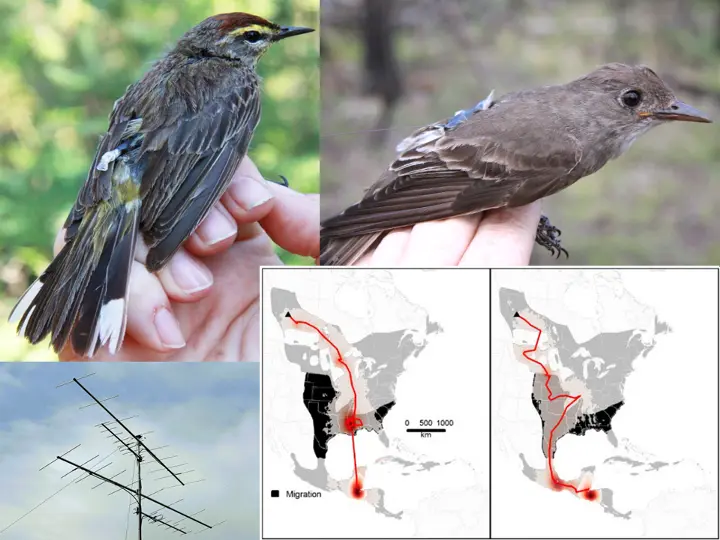
The Motus network, coordinated by Birds Canada (www.motus.org), is a citizen science radio telemetry program operating across the Americas. Motus is designed to define migratory pathways, between breeding grounds and overwintering locations. Specially designed transmitters ("tags") are attached to birds, with each tag emitting a unique signal identifying an individual bird that is picked up by any of the nearly 2,500 receiving stations across the intercontinental network. Nearly 68,000 tags have been deployed, with the data generated from tag detections revolutionizing our understanding of songbird migration.
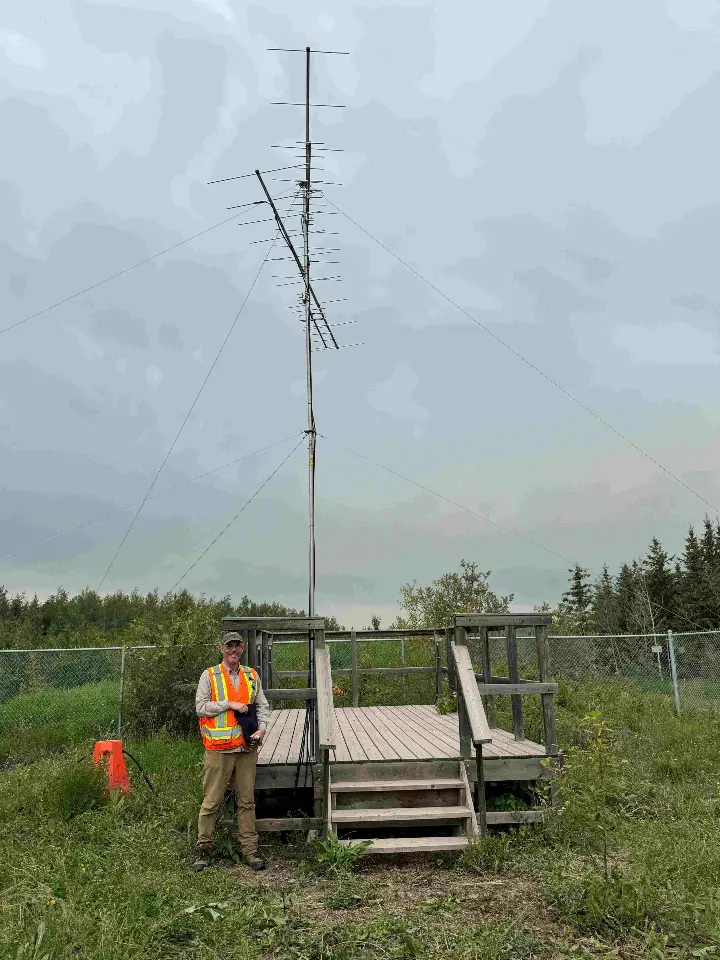
In 2025, we installed our first receiving station, north of Fort McMurray and now the northernmost Canadian station west of Manitoba. We are now seeking support for the purchase and deployment of our initial set of tags, targeting one of the declining species that breeds in northeastern Alberta. Tags would be deployed at an established, publicly accessible monitoring location in Fort McMurray where we conduct our bird-related community outreach programming. We adhere to all ethical requirements associated with bird handling and tag deployment.
Data from our tags would be integrated into the Motus database, leveraging investments by many into a powerful database for use by individuals, citizen scientists, non-profit conservation organizations, researchers, and government agencies. All tag detections (regardless of the tagging organization) and the migratory pathways derived from these detections are displayed on the free-access website.
Who Will Benefit?
As a component of the WBWRI's broader education and conservation mandate, our deployment of telemetry tags supports developing and expanding interests in birds among our local community - WBWRI members, members of the public, school classes and youth organizations, and community organizations. To-date, our outreach programming has included the Autism Society, Alberta's Junior Forest Rangers, The 9th Fort McMurray Scouts, NextGen Careers, Keyano College, and school classes of varying grade levels. In all events, participants have expanded their understanding of birds and the wonders of migration. For some, this has been a first exposure that has developed an interest, while for others, this has been an opportunity to expand their understanding and passion for the natural world. Some have characterized their experiences with us as having been positively life changing.
Our Motus tagging project will build on these successes, adding radio telemetry as a tool to better understand migration, and to define critical breeding and overwintering habitats for birds. Each tag is uniquely coded, with tag detections visualized on the freely available Motus website, bringing information on the tagged birds into home and educational environments. Anyone with an interest in birds can participate in our field monitoring programs including Motus tag deployment, or independently through the data displays available on the Motus website.
In parallel with the passion created at the individual level, Motus tag data are critical to the work of the citizen scientists, non-profit organizations, researchers, and government agencies that are working towards supporting an environment that sustains our shared migratory birds.