
Bird Monitoring in the Wood Buffalo Region
Details
Northern Alberta
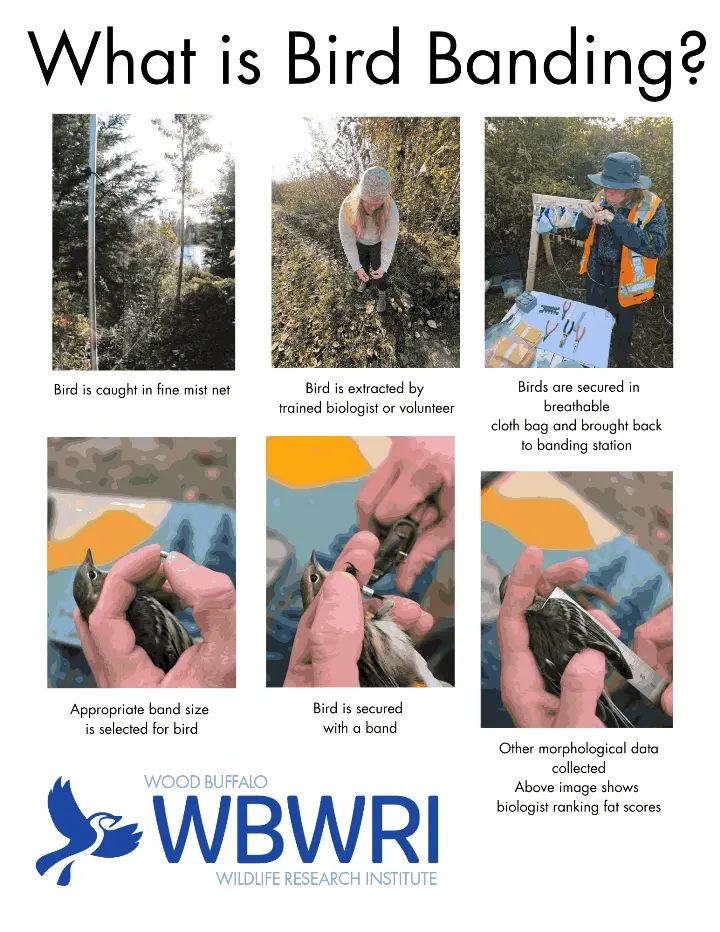
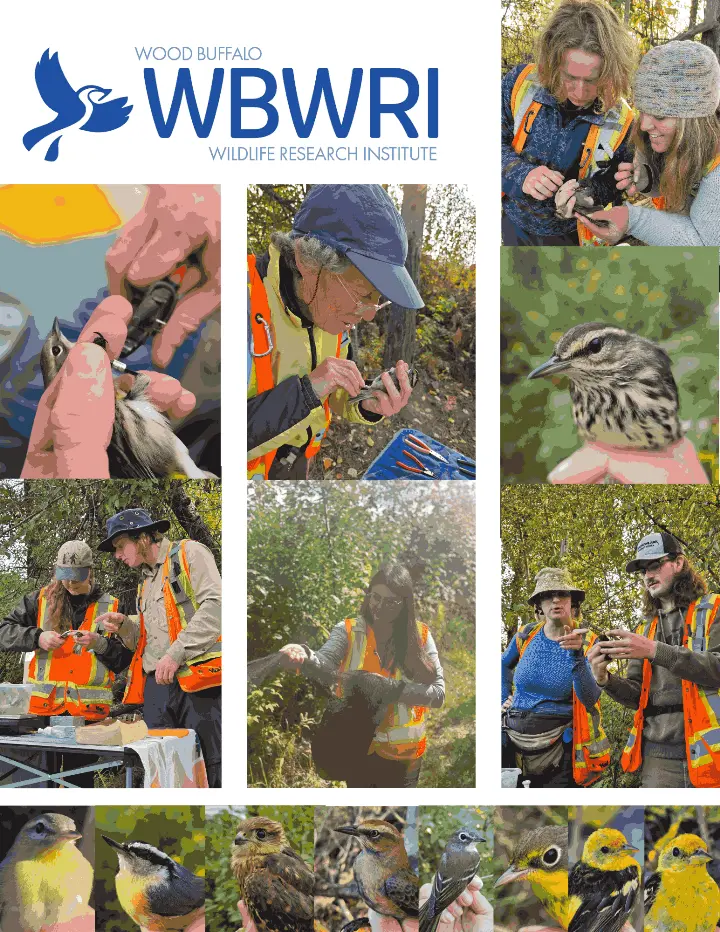
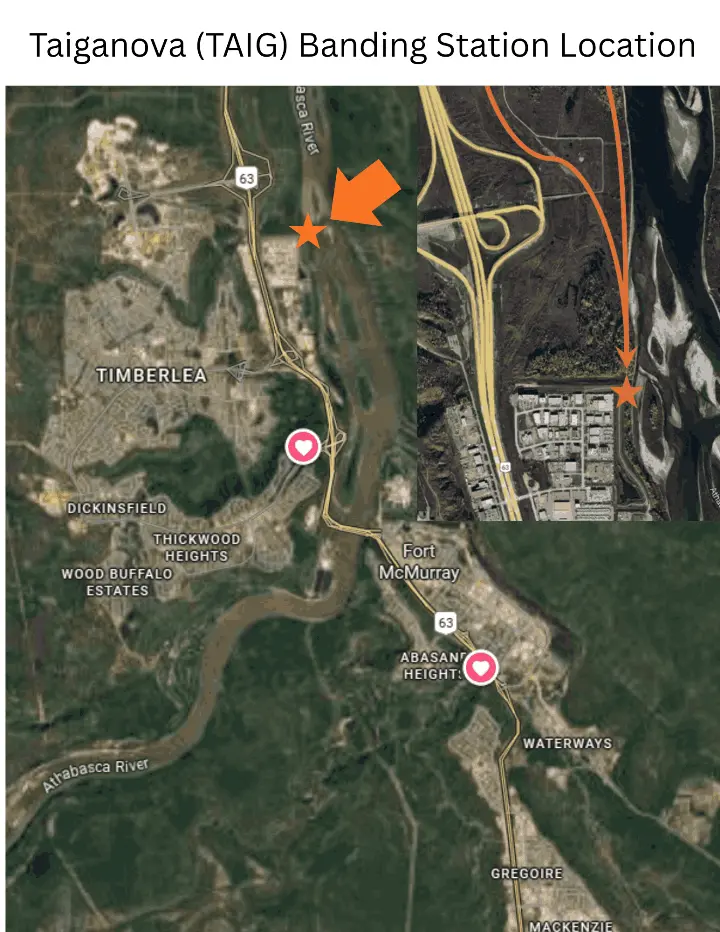
The Idea
Bird monitoring in the Wood Buffalo region has historically occurred in areas that are difficult for the public to access, resulting in few opportunities for community members to experience or participate in this type of research firsthand. The Wood Buffalo Wildlife Research Institute (WBWRI) was established to help bridge that gap—bringing high-quality wildlife science into publicly accessible spaces and creating opportunities for residents to learn, contribute, and connect with the natural environment.
WBWRI is seeking Field Law’s support in the form of a grant that contributes to 2026 operations ofTaiganova Bird Banding Program—acommunity-accessible bird monitoring station that runs from August 11 to the end of September, in Fort McMurray. This program offers a unique opportunity for residents, youth, and Indigenous community members to participate directly in monitoring migratory birds.
The Bird Banding Process
Bird banding is a long-standing scientific technique used to track bird populations, migration routes, and habitat use. Birds are safely captured in, and gently extracted from, gossamer-fine mist nets. Each bird receives a lightweight aluminum leg band engraved with a unique number issued by the Canadian Wildlife Service.
Biologists record measurements such as age, sex, wing length, body weight, and fat stores—data that help assess the health and migration success of local bird populations. The band helps track individual birds over time, and the data help us understand how birds are faring.
The Idea and Purpose
The Taiganova Station opens opportunities for participation in bird monitoring, creating a public-facing, educational space where professional science meets community participation. Over the fall monitoring program, licensed biologists and trained volunteers will capture, band, and release songbirds, collecting data while offering daily learning opportunities for visitors and participants.
Field Law funding will support operating and outreach costs:
Biologist staff time – Taiganova operations, volunteer coordination and community engagement session support. (80 hours for Institute Bander and Support Bander at $35/hr).
Educational outreach materials and community engagement sessions (10 pairs of binoculars to loan out to participants during programming ($45/ea)
Funding for the remainder of the costs of running our bird-banding station are being sought through other grants and partnerships.
Who Will Benefit?
WBWRI intends on opening up Taiganova’s banding operations to a variety of individuals in the upcoming year. WBWRI members have opportunities to sign up as a volunteer to either observe bird banding demonstrations or to be trained in the banding process. In the upcoming year, we intend to host a variety of demonstrations, and community group and school visits. Bird banding gives many their first exposure to the wildlife sciences, which can inspire and develop career paths in biology or the environmental sciences. Bringing the classroom outdoors is as equally exciting for the instructors as it is for the students, and our program will inspire mindfulness and an appreciation for the outdoors.
This project benefits the local community, Indigenous groups, youth, and national conservation efforts. It provides educational opportunities, builds volunteer skills, strengthens cultural and scientific connections to the land, and generates data of international importance.