
Expanding Accessible Activities: Adaptive & Sensory Equipment for AAC Camp Alberta
Details
Northern Alberta
The Idea
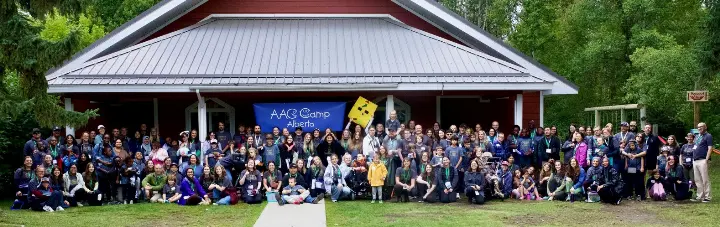
Since 2016, AAC Camp Alberta has provided a transformative annual weekend family camp for children who rely on Augmentative and Alternative Communication (AAC) to communicate. Campers are paired 1:1 with counselors supervised by speech-language pathologists, occupational therapists, and physical therapists. At camp, children gain confidence surrounded by peers and mentors using similar communication devices.
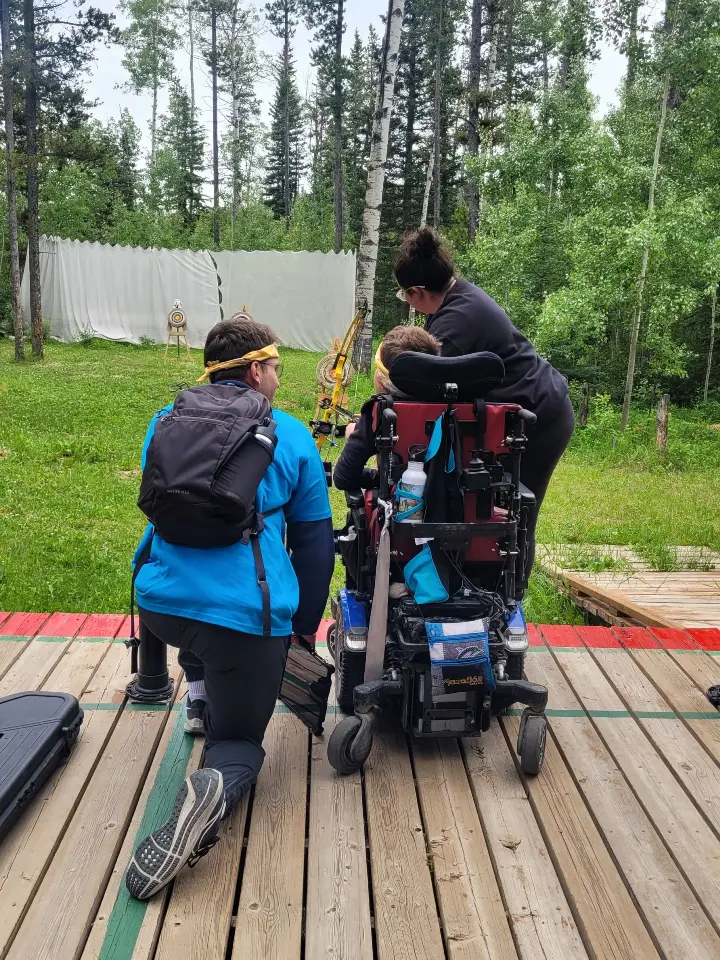
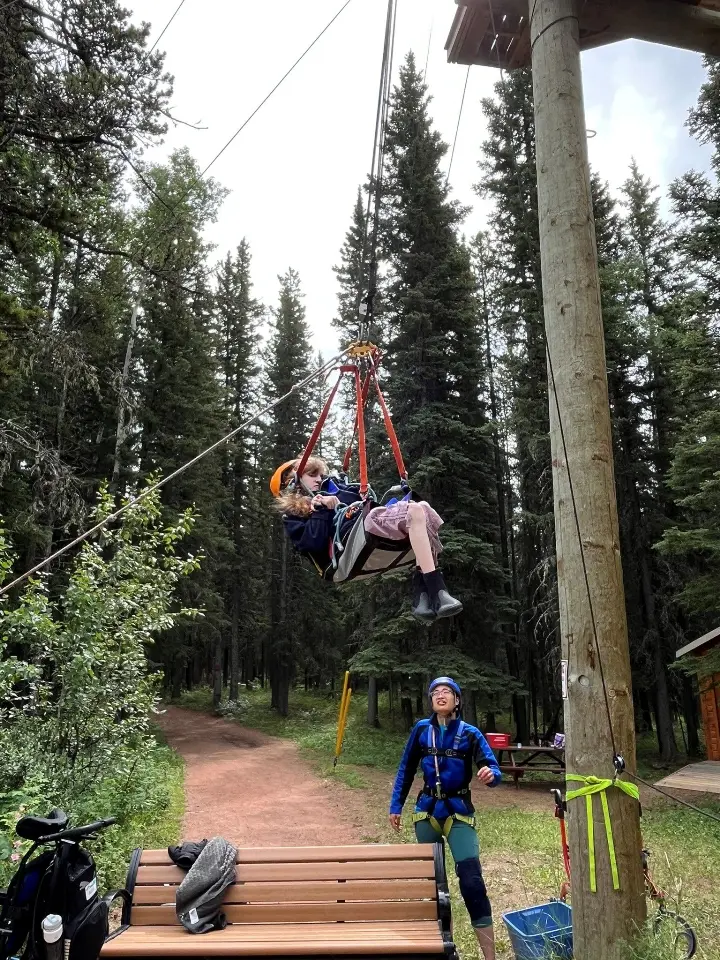
Our philosophy is to only offer activities that every single camper can access together. However, due to a lack of specialized adaptive equipment, many iconic camp activities have remained off-limits. Children with significant physical disabilities cannot access the giant swing without supportive adapted harnesses, while campers with motor limitations cannot hold standard archery equipment, operate traditional art tools, or take turns in board games using standard spinners or dice. Additionally, many of our campers with autism and sensory processing differences struggle to self-regulate in dynamic camp environments without dedicated sensory tools.
This project aims to bridge this gap by expanding our inventory of specialized adaptive and sensory equipment. Funding will support the purchase of:
Adapted Harnesses: Postural and supportive harnesses allow campers with physical disabilities to safely participate in high-adventure activities alongside their peers.
Adapted Archery Equipment: Universal mounts, release aids, and modified bows enabling campers with motor limitations to shoot independently.
Switch-Activated Creative & Leisure Tools: Adapted art equipment (e.g., switch-activated paint spinners, cup pourers) and switch-activated game spinners allow campers with motor limitations to complete craft projects and play board games autonomously.
Sensory Regulation Equipment & Aids: Portable and stationary sensory tools (e.g., spinny seats, hammock chairs, black-out tents, light trays) help autistic campers maintain regulation throughout the day, allowing them to use their AAC systems more effectively.
These adaptations go beyond physical access—they create shared, joyful experiences that naturally motivate campers to interact. Whether soaring on a zipline, creating spin art, or taking turns in a board game, these activities give campers meaningful opportunities to practice social communication, express choices, cheer on peers, and chat using their AAC devices in shared moments of connection and experience the camaraderie of full camp participation.
Who Will Benefit?
AAC Camp Alberta accepts 25-30 families per year, with 25-30 campers who use AAC, 20-25 siblings and 50-60 parents and caregivers (approximately 100 individuals). Campers attending AAC Camp Alberta include children with complex communication needs, aged 5 to 16, who use robust multimodal augmentative and alternative communication (AAC) systems. Parents and siblings attend AAC Camp with the campers, joining in family activities (e.g., campfires, canoeing) and learning how to support the use of AAC in everyday activities back home. More than that, attending camp as a family creates opportunities for connection with each other, as well as opportunities to interact and share with other families going through similar experiences.
AAC campers have a range of diagnoses and disabilities, including cerebral palsy, Rett syndrome, Down syndrome, autism, apraxia of speech, and other diagnoses. Some have co-occuring hearing loss, language delays/disorders, and/or cognitive impairment. All will benefit from the addition of adaptive equipment and exposure to new and different camp activities.
In addition, 30-35 graduate students from University of Alberta programs in speech-language pathology, occupational therapy, and physical therapy serve as counsellors and are supervised by 15 volunteer professionals from the community, gaining invaluable hands-on experience working with campers and their families in an interprofessional context. Counsellors not only learn about augmentative and alternative communication, but experience family-centred practice and work with students and volunteers from a variety of professions.
Note: We selected Northern Alberta because our 2027 camp will take place at Gull Lake Centre, just north of Red Deer. However, campers and volunteer professionals come from across Alberta.